


What Does Remote Video Monitoring Mean?
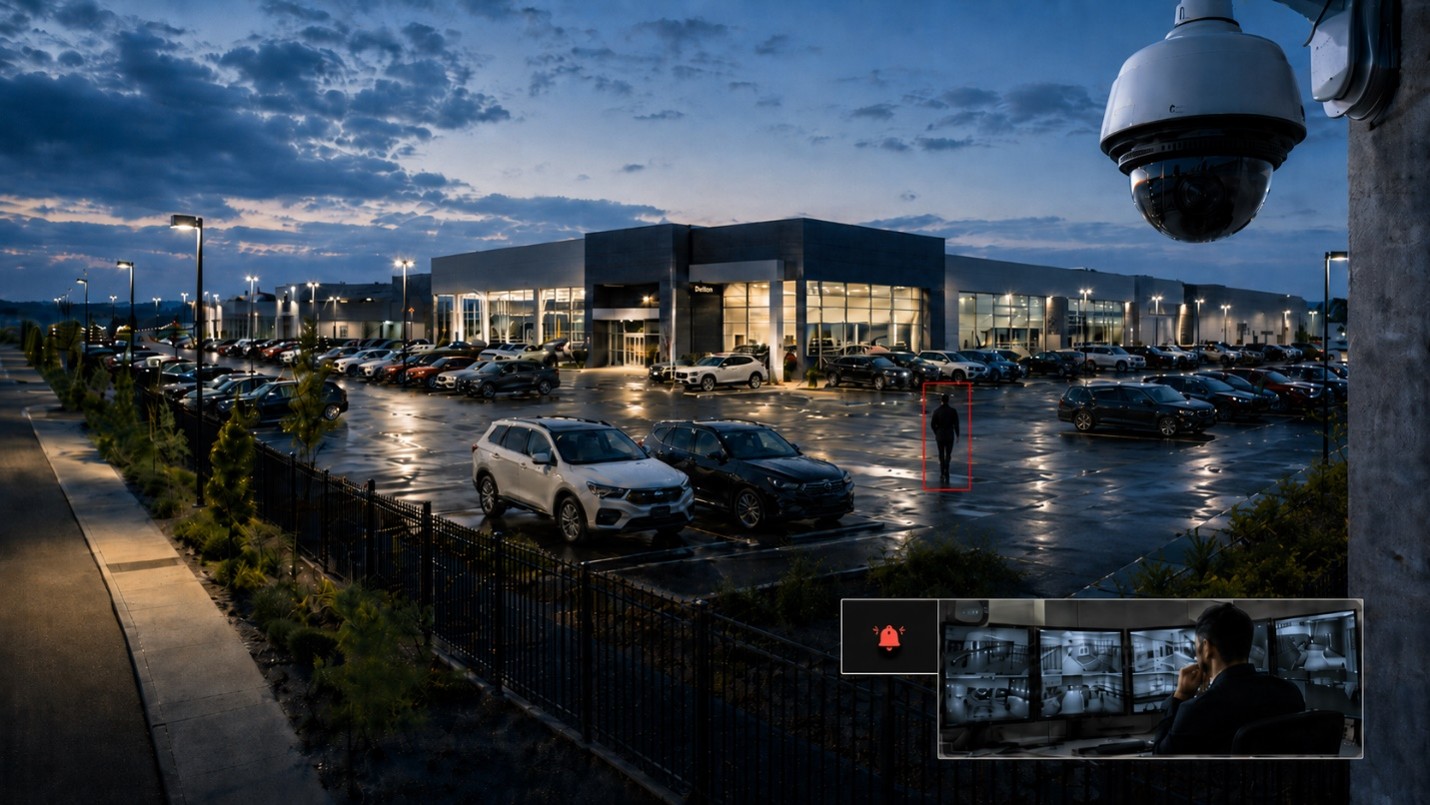
Remote video monitoring is a service where trained security operators review live camera events and alerts from an off-site monitoring center.
Operators do not sit and watch every second of footage. Instead, AI detection, camera rules, motion alerts, video analytics, or scheduled monitoring times help flag activity that needs attention.
When an alert comes in, the operator reviews it and asks: Is this normal? Is it suspicious? Does it need a response?
If the activity looks suspicious, the operator follows the property’s response plan. That may include speaking through an on-site speaker, calling a manager or emergency contact, documenting the incident, or escalating when needed.
The simple difference: standard cameras record the event. Remote video monitoring helps respond during the event.
Why Cameras Alone Are Not Enough
Cameras matter. They create a record. They help with investigations. They can support insurance claims. They can help property managers understand what happened.
But cameras alone are passive.
They do not speak to someone on the property. They do not call your team. They do not decide whether something is suspicious. They do not create a response.
That is where the gap happens. A property can have cameras everywhere and still deal with theft, vandalism, trespassing, loitering, gate issues, or after-hours activity.
The issue is not always the camera. The issue is what happens after the camera sees something.
Virtual Guard’s Approach: Detect, Respond, Prevent
Detect
Detection starts with the right camera layout, camera settings, and AI monitoring rules. Alerts can flag movement after hours, activity near a gate, someone walking through a lot, or movement near equipment, vehicles, or entrances.
Technology helps, but human review matters. Not every alert is a real threat. A trained operator can help tell the difference between routine activity and suspicious behavior.
Respond
Once suspicious activity is verified, the operator follows the response plan for that property.
A common response is live voice-down audio. This means a real person speaks through an on-site speaker and tells the person the property is being monitored and they need to leave.
That is very different from a camera silently recording. It shows the person that someone is watching in real time.
If the situation continues, the operator can escalate to the authorities when appropriate.
Prevent
Prevention is the goal.
Virtual Guard is not just there to collect footage after something bad happens. The goal is to help reduce trespassing, theft, vandalism, loitering, unauthorized access, and after-hours activity before it turns into a bigger problem.
No security company can promise every incident will be stopped but a property that is actively monitored and responded to can become a harder target.

What Happens During a Monitored Event?
1. A camera or AI rule detects activity.
2. A monitoring operator reviews the alert.
3. The operator decides whether it looks routine or suspicious.
4. If needed, the operator issues a live voice-down warning.
5. If the person leaves, the event is documented.
6. If the activity continues, the operator follows the escalation plan.
7. An incident report is created.
The point is speed. The response happens while the event is still in progress, not hours later.

Where Remote Video Monitoring Helps Most
Auto dealerships: Dealerships have open lots, valuable vehicles, and large areas to cover. Remote monitoring can help identify people moving through the lot after hours and support a response before vehicles are damaged or property is stolen.
Construction sites: Construction sites often have tools, copper, equipment, and materials left on site. Remote monitoring helps cover nights and weekends when crews are gone.
Warehouses and industrial properties: Large buildings, loading docks, gates, and parking areas can be hard to watch in person. Monitoring helps extend visibility across the property.
Retail centers and commercial properties: These properties may deal with loitering, vandalism, dumping, break-ins, or parking lot activity. Remote monitoring helps property managers respond sooner.
Multifamily properties and gated communities: Apartment communities, HOAs, and gated communities may need help watching entrances, parking areas, amenity spaces, common areas, and gate access points.
Is Remote Video Monitoring the Same as a Virtual Security Guard?
The terms are similar. A virtual security guard is usually a remote operator who watches camera activity and responds without being physically on-site.
The important difference from an on-site guard is physical presence. Remote monitoring can see, speak, document, and coordinate a response. It cannot physically stop someone.
For many properties, especially after hours, that tradeoff makes sense. One monitoring team can help watch multiple areas at once, while a single on-site guard can only be in one place at a time.
What to Look for in a Remote Monitoring Provider
· Are the operators trained for security monitoring?
· How are alerts verified?
· Can operators use live voice-down audio?
· Can the response plan be customized for your site?
· Who gets contacted if something happens?
· What kind of incident report do you receive?
The provider should not use the same script for every property. A dealership, construction site, warehouse, and HOA all have different risks.

Is It Right for Your Property?
Remote video monitoring is not the answer for every property. But it is worth considering if you have after-hours activity, large areas that are hard to patrol, recurring trespassing, theft or vandalism, gate or access issues, or cameras that no one watches in real time.
The real question is not, “Do we have cameras?”
The better question is, “When our cameras see something, what happens next?”
Start with a Security Assessment
Security cameras can show you what happened. Virtual Guard helps you respond while it is happening.
If your property is dealing with trespassing, theft, vandalism, loitering, or after-hours activity, schedule a Virtual Guard security assessment. We can help identify where your property is exposed and how remote video monitoring could support your existing security plan.
Frequently Asked Questions
What is the difference between remote video monitoring and standard security cameras?
Standard cameras record footage. Remote video monitoring adds trained operators who review alerts and respond while the event is happening.
How does live voice-down audio work?
When an operator sees suspicious activity, they can speak through a speaker on the property and tell the person the property is being monitored and they need to leave.
Is remote video monitoring available 24/7?
Coverage can be set up around the hours your property needs it most, including nights, weekends, and holidays.
Can remote video monitoring replace on-site guards?
It depends on the property. Some properties use remote monitoring instead of certain guard hours. Others use it together with guards.
What types of properties benefit most?
Auto dealerships, construction sites, warehouses, retail centers, multifamily properties, HOAs, gated communities, and commercial properties with after-hours security concerns.
How fast can operators respond?
Response time depends on the monitoring setup, alert type, and site protocol. A good provider should explain exactly how alerts are reviewed and what happens next


 Call Now